
Drop In Sink Versus Undermount: Which One Actually Works Better?

If you’re renovating a kitchen or bathroom, the drop in sink versus undermount debate comes up fast – and the answer isn’t as simple as “pick the prettier one.” Each style has real pros and cons that affect daily use, cleaning, resale value, and how long your countertop lasts.
Here’s the quick verdict: undermount sinks look cleaner and are easier to wipe down, while drop-in sinks are easier to install and work with almost any countertop material. Your choice should come down to your countertop type, budget, and how much you care about maintenance.
The Core Difference
| Feature | Drop-In Sink | Undermount Sink |
|---|---|---|
| Installation | Drops into hole from above | Mounted below countertop surface |
| Visible rim | Yes – sits on countertop | No – seamless look |
| Countertop compatibility | Works with all materials | Requires solid surface (granite, quartz, solid surface) |
| Cleaning ease | Rim collects grime | Easy wipe-into-sink cleaning |
| DIY-friendly | Yes | Requires professional install |
| Cost (install) | Lower | Higher (labor + support brackets) |
| Resale appeal | Standard | Preferred by buyers |
Drop-In Sinks: What You’re Really Getting
A drop-in sink (also called a self-rimming or top-mount sink) has a visible lip that rests on top of your countertop. You drop it into a pre-cut hole and secure it from below.
Why people choose drop-in:
- Works on laminate, tile, wood – not just stone
- You can DIY the install with basic tools
- Much cheaper to replace if it cracks or you want an upgrade
- Available in far more styles and sizes
The real downside is that rim. Water, crumbs, and soap scum collect right where the rim meets the counter. It takes consistent scrubbing to keep it looking clean. Over time, the sealant around the rim can also crack and allow water underneath – which leads to countertop damage.
Undermount Sinks: The Clean Look Has a Price
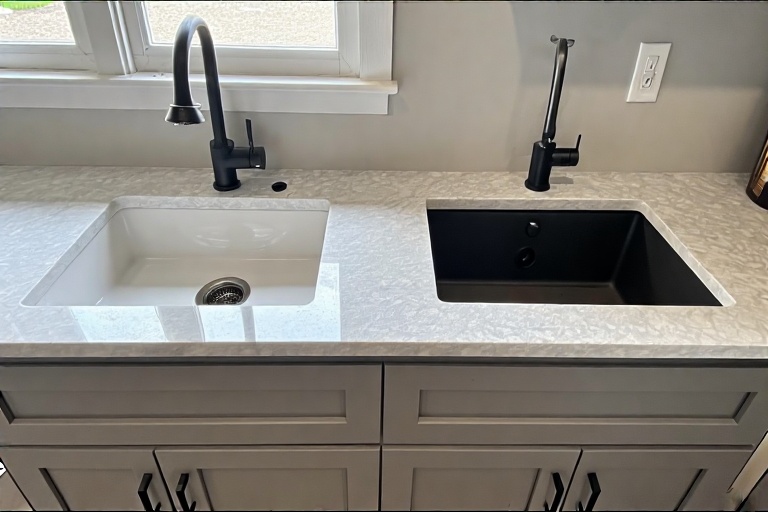
An undermount sink mounts below the countertop with the counter edge exposed above it. There’s no rim, no lip – just a clean transition from counter to sink.
Why people love undermount:
- Easiest counter-to-sink cleanup – just wipe debris straight in
- Sleek, modern appearance that most buyers prefer
- The countertop edge becomes a design feature
- No rim seal to crack or discolor
But here’s what they don’t tell you:
- You *must* have a solid countertop – laminate will absorb water at the exposed edge and swell
- Installation requires precise cutting and professional mounting
- If the sink fails or you want to swap it, replacement is a bigger job
- Generally costs $200-$400 more installed
Which Countertop Goes With Which Sink?
This is often the deciding factor – and people overlook it.
| Countertop Material | Drop-In | Undermount |
|---|---|---|
| Laminate (Formica) | ✅ Yes | ❌ No – water ruins edge |
| Tile | ✅ Yes | ⚠️ Difficult |
| Granite | ✅ Yes | ✅ Best choice |
| Quartz | ✅ Yes | ✅ Best choice |
| Marble | ✅ Yes | ✅ Works well |
| Solid Surface (Corian) | ✅ Yes | ✅ Yes |
| Butcher Block / Wood | ✅ Yes | ⚠️ Needs sealing |
The Honest Verdict: Who Should Choose What?
Go with a drop-in sink if:
- You have a laminate or tile countertop
- You’re doing a budget renovation
- You want to DIY the install
- You’re renting and want minimal commitment
Go with an undermount sink if:
- You have granite or quartz countertops
- Kitchen aesthetics matter to you
- You hate scrubbing around rims
- You’re renovating to sell and want buyer appeal
Cost Comparison
| Item | Drop-In | Undermount |
|---|---|---|
| Sink cost (mid-range) | $150-$400 | $250-$600 |
| Installation labor | $0-$100 (DIY possible) | $150-$300 |
| Total installed | $150-$500 | $400-$900 |
The drop in sink versus undermount decision often boils down to your countertop and your budget. If you already have stone countertops and you’re remodeling properly, the undermount is worth every penny. If you’re working with laminate or just need a functional, affordable fix – drop-in does the job without complaint.